
Train Your Decision-Making, Not Just Your Physiology
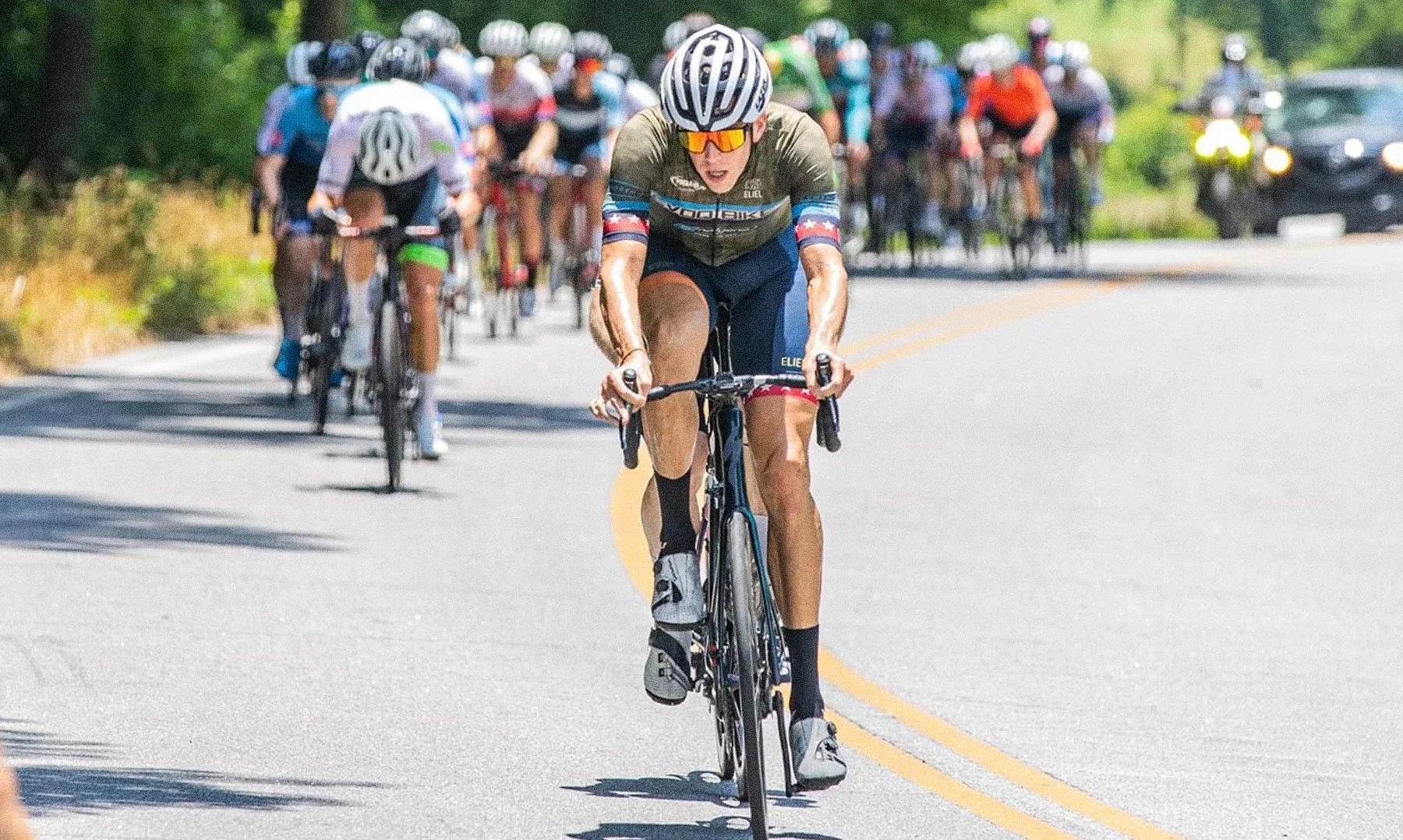
The strongest rider doesn’t always win.
Often, the rider who makes the best decisions does.
Race craft is trainable, but most cyclists review only their power afterward.
Cyclists spend countless hours developing the physiological tools needed to race: FTP, VO₂max, sprint power, durability and fatigue resistance. But having a bigger toolbox doesn’t guarantee that you’ll use those tools at the right moments.
You can have excellent fitness and still waste it by:
Following a move that was never dangerous.
Closing a gap someone else would have closed.
Sitting too far back before a technical section.
Attacking when the group is still organized and motivated to chase.
Missing the decisive move because you were unwilling to spend energy five minutes earlier.
Race craft is essentially the ability to answer one question:
Is this moment worth the energy it will cost me?
Every rider has a limited number of matches. Fitness determines how many you have and how large they are. Race craft determines where you burn them. A rider with slightly less power can still beat you if they spend their energy only when the race demands it, while you waste yours reacting to every acceleration.
During hard group rides, start actively asking yourself:
Should I follow this move?
Can I let someone else close this gap?
Is this worth spending a match?
Who in this group actually has a reason to chase?
Would sitting five wheels farther forward actually save more energy?
That final question is especially important.
Many riders think positioning aggressively means wasting energy near the front. But sitting too far back can be considerably more expensive. Every acceleration gets amplified. Gaps open ahead of you. You brake harder into corners and sprint harder coming out of them.
You may technically be “sitting in,” yet repeatedly producing unnecessary power just to remain attached.
Moving forward before a difficult section might require a 20-second effort. Getting caught behind a split afterward could require two minutes at VO₂max—or end your race completely.
Good positioning is not about riding in the wind all day or fighting for the front at every moment. It is about knowing when position is about to become valuable. Before a narrow road, a crosswind, a climb, a technical descent or a series of corners, spending a little energy early can save considerably more energy later.
The same principle applies to following attacks. Not every move deserves the same response. Who attacked? How many strong riders are in the move? Are the major teams represented? Is the course about to make the gap harder to close? A two-rider move early in a long race might be harmless. The same move with ten kilometers remaining, containing several of the strongest riders, could decide the race.
The hard part is that these decisions must be made while you’re tired, uncomfortable and surrounded by incomplete information. That’s why race craft cannot be learned entirely through podcasts, articles or post-race power analysis.
It requires deliberate practice.
A hard group ride should therefore be more than an unstructured fitness session. Use it to experiment, learn and collect reps that will eventually allow your brain to make these choices more automatically.
Try moving forward before a climb instead of during it. Let another rider close a non-threatening gap. Follow a move you would normally hesitate to follow. Watch which riders repeatedly chase—and which riders sit quietly until the important moments.
You can also give yourself one tactical objective for the day. Decide that you will enter every corner in the front third of the group. Practice moving up without using a huge surge. Commit to following the first move containing two riders you consider dangerous.
You won’t make the correct decision every time. That isn’t the goal.
Mistakes are useful if you understand why they happened. They give you information that improves the next attempt.
The goal is to strengthen the connection between what you see, what you anticipate and how you respond.
After every race, ask yourself:
Which single decision cost me the most energy?
Not which interval you failed to complete. Not whether your normalized power was high enough. Identify the moment when a better decision could have changed the outcome.
Maybe you started the final climb 40 wheels too far back.
Maybe you closed three gaps that weren’t your responsibility.
Maybe you followed every early attack and had nothing left when the strongest riders finally moved.
Maybe you hesitated for five seconds—and then spent two minutes trying to correct that hesitation.
Once you identify the moment, go one step further. What did you see? What did you miss? What should you have noticed earlier? Most importantly, what specific behavior can you practice next time?
“Race smarter” is too vague. “Move into the front 15 riders before the final climb” gives you something actionable. So does “wait five seconds before closing a non-dangerous gap” or “follow moves containing either of the two strongest riders.”
Write the lesson down. Then choose one behavior to practice during your next race or hard group ride.
Over an entire season, those small lessons accumulate. You begin recognizing dangerous moves earlier. You learn when patience is saving energy and when it is simply indecision. You become more comfortable moving through a group, protecting your position and committing when the moment actually matters.
Another five watts of FTP is always useful. But using the watts you already have more intelligently might be worth far more.