
Can Amateurs Survive UAE’s VO2max Workout?
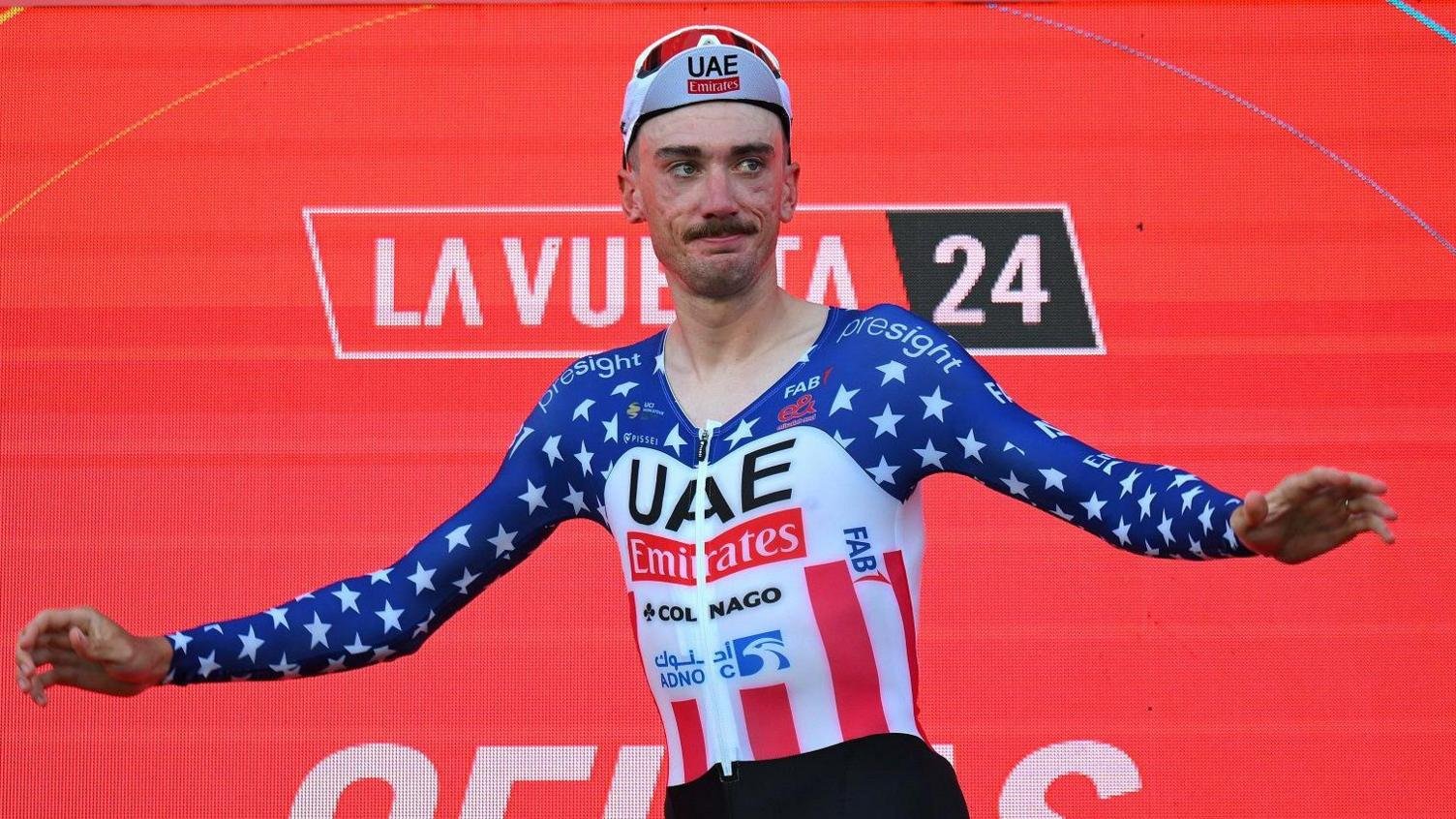
Brandon McNulty recently shared a workout that made a lot of cyclists immediately think one thing:
“Absolutely not.”
The session?
6 x 4 minutes at 117–120% of FTP
Then 6 x 30 seconds FULL GAS
For McNulty, that translated to roughly:
500–520 watts for the 4-minute efforts
800–900 watts for the 30-second efforts
And honestly… It's brutal.
But the interesting part isn’t trying to copy Brandon McNulty’s exact watts. Most amateurs shouldn’t. The real lesson is understanding why WorldTour riders do sessions like this and how normal cyclists can adapt the same concepts to become faster.
Because underneath all the suffering, this workout is training something incredibly important for modern racing:
The ability to produce huge power after you’re already exhausted.
What This Workout Is Actually Training
At first glance, this just looks like another “VO2max workout.”
But it’s really much more than that.
The 4-minute efforts are targeting:
Massive oxygen demand
Aerobic power
Fatigue resistance
Lactate production and processing
Then the 30-second efforts layer on:
Anaerobic repeatability
Sprinting while fatigued
Race-specific surges
That combination matters.
A lot of riders train these systems separately:
VO2 days
Sprint days
Anaerobic days
But races don’t happen in clean little categories.
Real racing is messy.
You might:
attack over a climb,
recover at threshold,
close a gap,
respond to another acceleration,
and still need to sprint later.
This workout blends those demands together.
This is basically simulating the end of a hard race… where you still need to attack, respond, or sprint.
And that’s exactly why pros love these sessions.
Modern Racing Is Violent
Cycling has changed. It’s more explosive than ever.
Even amateur racing has become far more stochastic:
hard accelerations,
repeated attacks,
punchy climbs,
corners,
surges,
and constant changes in pace.
Modern racing often rewards riders who can repeatedly surge above threshold and still recover enough to do it again.
That’s why sessions like this exist.
You need:
a massive aerobic engine,
AND the ability to produce violent efforts late in races.
Think about:
climbing attacks,
breakaway accelerations,
bridging gaps,
responding to moves after 2-3 hours of racing,
or sprinting after repeated climbs.
The scary part isn’t usually the first interval.
Almost everyone can fake one hard effort.
The real separator is what happens after 20–30 minutes of accumulated suffering.
That’s what WorldTour riders are exceptionally good at.
Why Most Amateurs Fail These Workouts
Here’s the big mistake:
Amateurs see a pro workout and assume they should replicate it exactly.
That’s usually a terrible idea.
Brandon McNulty has:
years of elite aerobic development,
absurd recovery capacity,
incredible fatigue resistance,
and the ability to tolerate enormous lactate loads.
Most amateurs don’t.
And that’s okay.
The goal of training is adaptation — not destruction.
Too many riders turn every interval session into a survival test:
power falls apart halfway through,
cadence collapses,
consistency disappears.
That’s not productive training.
The workout only works if you can absorb it.
One of the hardest things for ambitious cyclists is learning that effective training often feels slightly restrained.
You should finish most workouts feeling challenged… not annihilated.
Especially with VO2max work. Every VO2 session doesn’t have to be a death march.
The Amateur Version of This Workout
Most riders can still benefit tremendously from the structure of McNulty’s session without copying the exact numbers.
For beginner-to-intermediate riders, I’d scale it like this:
Beginner / Intermediate Version
4 x 3 minutes at 108–112% FTP
3–4 minutes easy recovery
Then:
4 x 20 seconds hard
Full recovery between efforts
This keeps the same overall goals:
high oxygen demand,
hard aerobic work,
then neuromuscular efforts under fatigue.
But the total stress is much more manageable.
The key is maintaining quality.
If your power falls apart after interval two… you went too hard.
That’s incredibly important.
The goal should be:
hard but controlled,
breathing near max,
still capable of completing all intervals consistently.
That consistency is where long-term gains happen.
The Advanced Amateur Version
For Cat 1–2 riders or highly trained amateurs, you can move much closer to the pro structure.
Advanced Version
5–6 x 4 minutes at 112–118% FTP
4 minutes recovery
Then:
6 x 30 seconds HARD
2–3 minutes easy between efforts
This becomes much more race-specific.
These riders typically:
tolerate higher density,
recover faster between efforts,
and have larger aerobic engines.

What Should Recovery Look Like?
One thing people always ask with sessions like this:
“How easy should the recovery be?”
Answer:
Pretty easy.
For the 4-minute efforts:
easy spinning,
Zone 1 to low Zone 2,
enough recovery to restore quality,
but not complete recovery.
Usually:
1:1 recovery works well
4 minutes on / 4 minutes easy
Then during the 30-second efforts:
you actually want more recovery than most riders think.
Why?
Because if the goal is truly high anaerobic output, you need enough recovery to actually reproduce quality power.
If you only recover 30–45 seconds:
the efforts become aerobic sludge,
not true high-end anaerobic work.
That’s why 2–4 minutes recovery often works best for hard 30-second efforts.
You want:
real power,
real explosiveness,
real repeatability.
Not just surviving.
Where This Workout Fits Into Training
This is not a year-round workout.
It’s a high-cost session.
That means:
high fatigue,
high nervous system demand,
high recovery requirement.
These workouts fit best:
during race prep,
build phases,
or sharpening periods before key events.
Typically:
3–6 weeks before important races
once per week is plenty
It’s probably not ideal:
during deep fatigue,
during huge volume blocks,
or early base season.
That’s another mistake amateurs make:
They stack too much intensity on top of too much fatigue.
The result?
poor adaptation,
declining power,
stale legs,
inconsistent training.
Sometimes the smartest thing you can do is not force another massive interval session.
As the outline says:
“This is a high-cost workout. Respect it.”
The Bigger Lesson Here
The physiological concepts absolutely apply to amateurs:
aerobic power,
repeatability,
fatigue resistance,
producing power while cooked,
handling surges late in rides.
Those things matter for almost every cyclist.
The art is scaling the workout correctly.
Not ego-riding your FTP targets.
Not trying to impress Strava.
Not turning every Tuesday into a death march.
Just consistent, high-quality work.
That’s what actually makes riders faster.
Final Thoughts
Sessions like this are fascinating because they show what modern racing demands.
The sport increasingly rewards:
repeatability,
resilience,
recovery under pressure,
and the ability to hit hard efforts late.
Brandon McNulty’s workout is a perfect example of that evolution.
And while most amateurs shouldn’t try to replicate the exact numbers, they can absolutely borrow the principles:
hard aerobic intervals,
fatigue resistance,
anaerobic work after oxygen-heavy efforts,
and learning how to produce power while uncomfortable.
That’s where the magic happens.
Scale it intelligently.
Recover well.
Keep quality high.
And remember:
The goal isn’t to train like a WorldTour rider.
It’s to train appropriately enough to become the fastest version of you.