
Your First Crit: 10 Things I Wish I Knew Before My First Bike Race
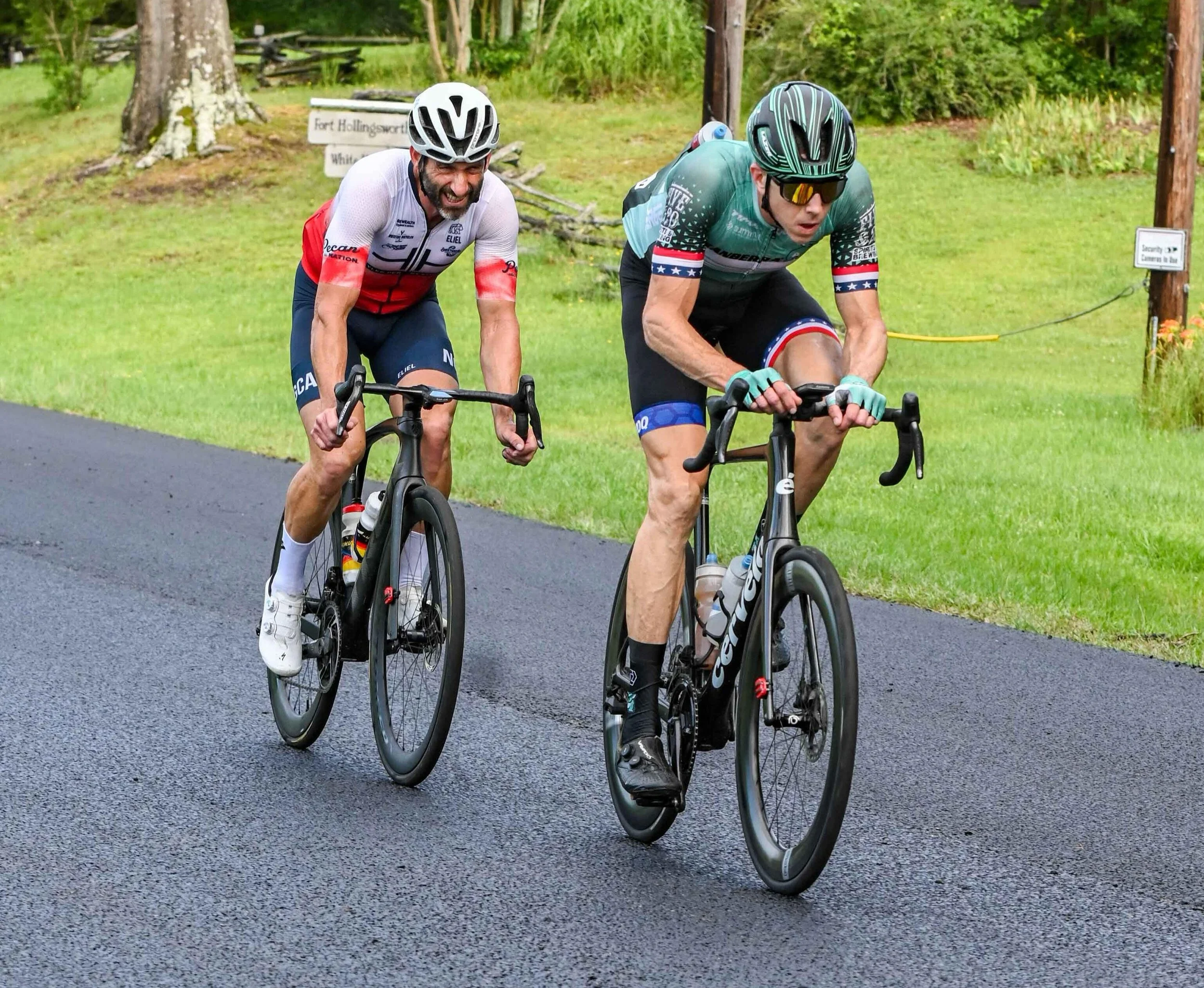
↓ The Start Will Be Fast — Be Ready to Clip In and Go
↓ The First 10 Minutes May Feel Insane
↓ Pack Riding Will Feel Nerve-Racking at First
↓ Don’t Race Like It’s a Workout
↓ Positioning Matters More Than FTP
↓ Cornering Smoothness Saves Watts
↓ Don’t Chase Everything
↓ Eat and Drink Earlier Than You Think
↓ Expect Sketchy Moments, But Don’t Panic
↓ Your First Goal Is Not to Win
↓ Bonus: Have Extra Time and Warm Up
There’s a funny thing about bike racing: at some point, you just have to go race.
You can watch YouTube videos. You can ask friends. You can read tactics articles. You can study power files, cornering lines, sprint positioning, and “how to move up in a pack” until your brain melts.
And all of that helps.
But bike racing is a little like saying:
“Hey, I’m going to jump into a pickup basketball game this weekend with people who have been playing their whole life. What do I need to know?”
Well… a lot.
You need to know the rules. You need to know where to stand. You need to know how people move. You need to understand spacing, timing, rhythm, when to pass, when to shoot, when to chill, and when someone is about to blow by you.
But you’re not going to learn all of that from one article.
At some point, you need to get in the game.
Bike racing is the same way.
You can prepare. You should prepare. But you’re also going to learn a ton just by pinning on a number, clipping in, and experiencing the chaos for yourself.
So this isn’t meant to be the one magical guide that teaches you everything about racing. That doesn’t exist. This is more like: “Here are the things I wish someone had clearly told me before my first crit.”
Let’s get into it.
1. The Start Will Be Fast — Be Ready to Clip In and Go
This is one of the simplest things that catches new racers off guard.
A crit does not start like a chill group ride.
There’s no casual rollout where everyone slowly gets organized and settles into pace. A lot of the time, the whistle blows and people are immediately sprinting out of the gate, fighting for position, and trying not to get swarmed before the first corner.
So yes, you need to be ready.
That means one foot clipped in, one foot on the ground, hands on the bars, eyes up, and mentally prepared to go hard as soon as the race starts.
If you’re unfamiliar with clipping in quickly, practice it.
Seriously.
Go to a quiet street, a parking lot, or even a stop sign on an easy ride. Put one foot down. Imagine a whistle blowing. Clip in immediately, push down and accelerate.
Do that a few times until it feels automatic. You’ll mess up, but it becomes second nature after a while.
Because in your first crit, the start may feel like everyone else got a memo that you didn’t. People will clip in fast. They’ll accelerate hard. They’ll dive for position. And if you miss your pedal, hesitate, or spend the first 20 seconds looking down at your shoe, you may already be at the back before the race has really started.
That does not mean your race is over. But it does make things harder.
The first goal of your first crit is simple: get clipped in, get rolling, and don’t panic.
2. The First 10 Minutes May Feel Insane
A lot of new racers think, “Okay, I can ride X watts for 45 minutes, so I should be fine in a 45-minute crit.”
Then the race starts and they think, “What on earth is happening?”
That’s because bike racing is not a steady-state workout.
The first 5 to 10 minutes of a crit are often aggressive, nervous, and surge-heavy. People are fresh. Everyone wants position. Some riders are attacking. Others are overreacting. People are braking too much in corners and sprinting out of them. The pack is stretching, compressing, and reshuffling.
So even if the average power doesn’t look crazy afterward, the feel of the race can be shocking.
It might be 700 watts out of one corner, 150 watts coasting into the next, 500 watts to close a gap, then braking again. That repeated acceleration is what makes crits hard.
If you’re coming off the trainer, this can be especially jarring. A trainer workout is controlled. A crit is not. On the trainer, your interval starts when the timer says so. In a race, the interval starts when someone two wheels ahead of you makes a mistake, opens a gap, or attacks.
This is why I always tell athletes: expect the beginning to feel harder than it “should.”
Don’t immediately spiral and think, “I don’t belong here.”
You might be fine. The race may settle. The first few minutes are often the most chaotic.
Your job is to survive that opening phase without making big mistakes, like overlapping wheels and crashing.
3. Pack Riding Will Feel Nerve-Racking at First
If you feel nervous riding in a pack during your first race, that does not mean you’re weak, unskilled, or not cut out for racing.
It means you’re normal.
Riding shoulder-to-shoulder, wheel-to-wheel, at speed, through corners, with people you don’t know, is a skill. And like any skill, it takes time.
Even when you get better at it, even some of the most seasoned pro’s on our podcast have said, “Oh that last corner in that crit is scary!!”
This is why group rides are so valuable. Not because they perfectly simulate racing, but because they help you get comfortable around other riders. You learn what it feels like to have someone next to you. You learn how to hold your line. You learn how to follow a wheel without staring at it. You learn how to relax your upper body when someone is close.
Pack skills are huge.
And if you’ve spent most of the winter riding indoors, you may be strong but rusty. That’s true for a lot of people. Everyone comes off the trainer with fitness, but not everyone comes off the trainer with pack feel.
So do not judge yourself too harshly if the first race feels overwhelming.
You’ll get better with pack riding over time.
The key is to respect the skill without fearing it. Stay relaxed. Keep your eyes up. Don’t make sudden movements. Don’t overlap wheels. Hold your line through corners. Communicate when needed. Be predictable.
Predictable is safe.
You don’t need to be the slickest rider in the race on day one. You need to be calm, aware, and predictable.
4. Don’t Race Like It’s a Workout
This is one of the biggest beginner mistakes.
A new racer often approaches a crit like a workout:
“I’ll ride hard, stay near threshold, and see how long I can last.”
But that’s not racing.
Racing is not about producing the prettiest power file. Racing is about using energy at the right moments and saving it everywhere else.
In a workout, steady power is often good. In a race, steady power might mean you’re doing too much work.
If you find yourself sitting on the front, pulling the field around, riding at tempo, and thinking, “Wow, I feel great,” there’s a decent chance you’re helping everyone else more than yourself.
A race is a game of energy conservation and positioning.
You want to pedal when you need to. You want to coast when you can. You want to use the draft. You want to avoid unnecessary wind. You want to avoid closing gaps that someone else should close. You want to avoid being the person who responds to every tiny move.
This is why race power files can be confusing. Two riders can finish the same race with very different power numbers. One rode smart, stayed sheltered, and conserved. The other was in the wind, closing gaps, braking too much, sprinting out of every corner, and wasting matches.
Same race. Totally different experience.
Your first race goal is not to “hold good power.”
Your goal is to learn how the race moves.
5. Positioning Matters More Than FTP
Fitness matters. Of course it does.
But in a crit, position can make a strong rider look average and an average rider look strong.
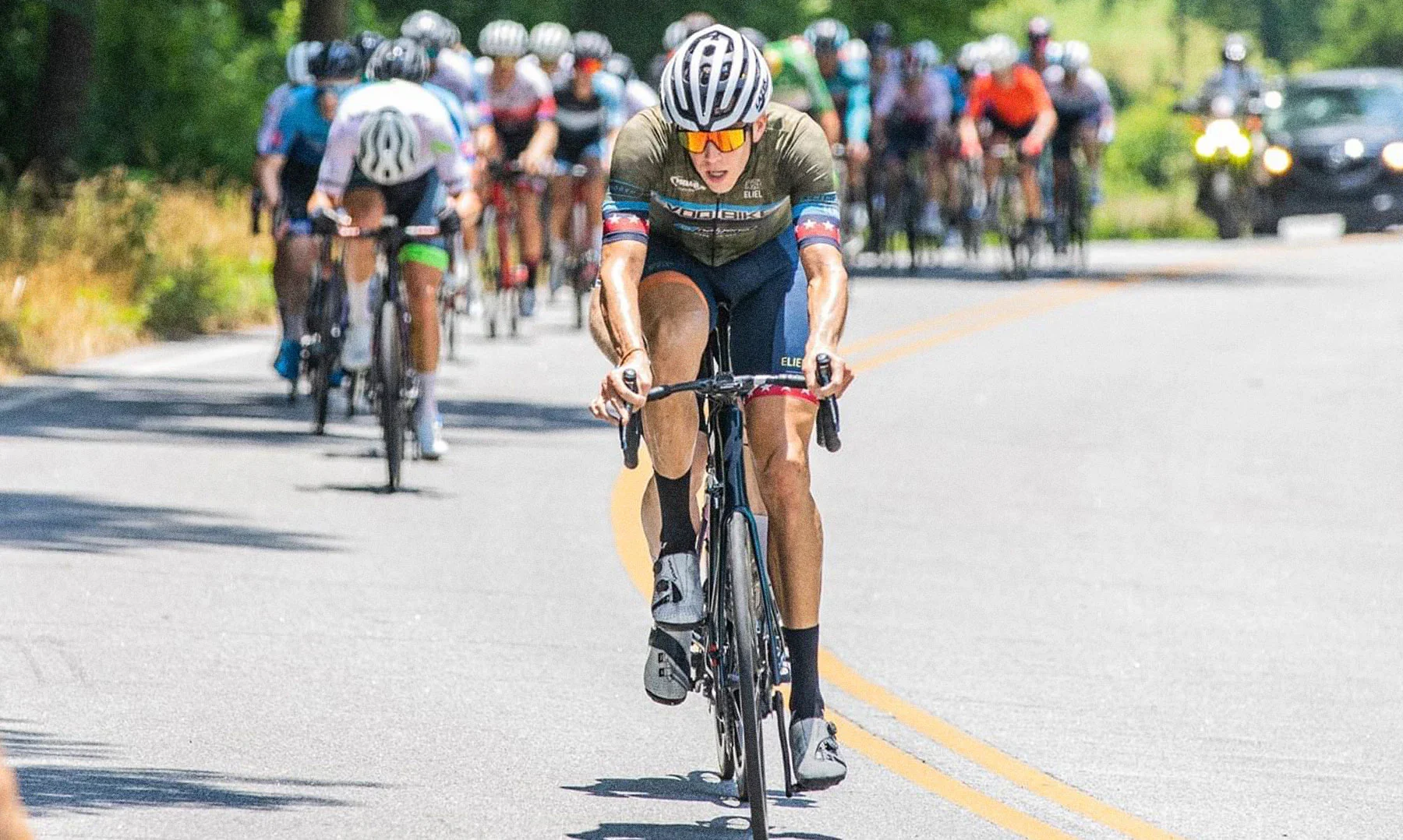
If you’re too far back, every corner becomes harder. The front of the race slows a little, turns smoothly, and accelerates. The back of the race slows a lot, bunches up, brakes harder, and then has to sprint to close gaps.
This is the accordion effect.
The farther back you are, the more you feel it.
That doesn’t mean you need to be first wheel. In fact, sitting on the front is usually not ideal unless you have a reason to be there. But you also probably don’t want to spend the entire race last wheel, especially as a beginner.
A good beginner goal is to stay somewhere in the first third of the field.
Not panicking at the front. Not dangling at the back. Just in the race, protected, learning, and giving yourself some buffer if gaps open.
Moving up takes practice. Don’t try to force your way through tiny gaps or dive-bomb corners. Instead, look for natural moments: wide sections, tailwinds, slight lulls, or moments when the pack spreads across the road.
Move up smoothly.
Think of positioning as something you maintain all race, not something you fix once you’re already in trouble.
6. Cornering Smoothness Saves Watts
In crits, cornering is fitness.
That sounds weird, but it’s true.
If you brake too much before every corner, take a bad line, coast awkwardly, lose momentum, and then sprint out of every turn, you’re going to burn a ton of energy.
Meanwhile, a smoother rider may be doing less power and going the same speed.
That’s free speed.
Or at least cheaper speed.
You do not need to be reckless. You do not need to rail corners like a pro. But you do need to learn how to be smooth.
Basic cornering tips:
Look through the turn, not down at the wheel in front of you.
Hold your line.
Avoid sudden braking.
Try to carry momentum.
Pedal when it’s safe, coast when needed, and avoid panic accelerations.
The biggest thing is to stay predictable. In a pack, your line affects everyone around you. If you suddenly change direction mid-corner, sit up, grab brakes, or drift unpredictably, that creates problems.
A lot of new racers are so focused on the wheel directly in front of them that they forget to look ahead. But the more you can see what’s happening two, three, four riders ahead, the better you’ll anticipate the flow of the race.
Smooth is fast.
Smooth is safe.
Smooth saves watts.
7. Don’t Chase Everything
In your first race, every move feels important.
Someone attacks and your brain screams: “Go!”
Someone accelerates and you think: “This is the move!”
A rider jumps out of a corner and you panic: “I have to close that!”
But here’s the truth: most moves in beginner races do not stick.
Some attacks are real. Some are nervous energy. Some are people testing their legs. Some are riders who have no idea what they’re doing. Some are doomed from the moment they start.
If you chase everything, you will eventually have nothing left.
This is where racing gets tricky, because yes, sometimes you do need to respond. But early on, you probably don’t have the experience yet to know which move matters. That’s okay.
For your first crit, the better default is usually: stay in the pack, stay sheltered, and don’t be the person closing every gap.
Watch how others respond.
Did one person attack and nobody cares? Maybe it’s not dangerous.
Did three strong-looking riders roll off together and the field hesitates? Maybe that’s more serious and the one that you DO bridge to. If you completely missed it, don’t panic and ride on the front, dragging everyone behind you. Bridge to the break, never chase the break (as a beginner cyclist racing solo and not on a team…things change when you move up. We’re not there yet!)
Is it early? Late? Is the course technical? Is it windy? Are teams represented? These things matter.
But again, you won’t learn all of that before race one. You learn it by racing.
So for your first race, give yourself permission not to be the hero.
You’re there to learn.
8. Eat and Drink Earlier Than You Think
For a short crit, you may not need a ton of fuel during the race itself, especially if it’s 30 to 45 minutes. But that doesn’t mean nutrition doesn’t matter.
A lot of beginners underfuel before racing because they’re nervous, busy, or worried about their stomach.
Then the race starts fast, the effort is punchy, adrenaline is high, and suddenly they’re running on fumes.
Have a normal pre-race meal. Give yourself enough time to digest (like 2-3H before you’re going to start warming up). Bring a bottle. Sip before the start. If the race is longer, hot, or part of a multi-race day, take fueling more seriously.
Even if you don’t drink much during the race, start with a bottle on the bike. You don’t want to be standing on the line already thirsty.
Also, don’t try a brand-new fueling strategy on race day. Your first crit already has enough novelty. Keep breakfast familiar. Keep snacks familiar. Keep the bottle familiar.
Race day is not the day to discover that a new gel makes your stomach revolt.
Simple is good.
9. Expect Sketchy Moments, But Don’t Panic
Crits can feel chaotic. Especially beginner crits.
There may be riders who brake too hard. Riders who sprint out of every corner. Riders who overlap wheels. Riders who yell too much. Riders who make questionable decisions. Riders who are strong but not smooth. Riders who are smooth but not strong.
That’s racing.
You can’t control everyone else. You can only control your own decisions.
The worst thing you can do is add more chaos to the chaos.
If something sketchy happens, stay calm. Keep your hands secure on the bars. Don’t make a sudden swerve unless absolutely necessary. Look for space. Hold your line. Breathe.
And if you feel truly uncomfortable, it’s okay to move to a safer position or even sit up. No beginner race is worth crashing over.
There’s a difference between normal race nerves and genuinely unsafe riding. You’ll learn that distinction with experience.
But in general, expect some nerves. Expect some messiness. Expect to feel a little overstimulated.
That doesn’t mean something is wrong.
It means you’re bike racing.
10. Your First Goal Is Not to Win
Could you win your first race?
Sure. It happens.
But that probably should not be the main goal.
A better first-race goal is:
Finish.
Learn.
Stay upright.
Practice pack riding.
Notice where the race gets hard.
Notice where you waste energy.
Notice how the field moves.
Notice how different riders handle corners.
Notice when things surge.
Notice how your body responds to the start.
Notice if you’re too far back.
Notice if you’re nervous around wheels.
Notice what you want to practice before the next one.
That is a successful first race.
Too many riders do one race, get dropped, and think, “I’m bad at racing.”
No. You’re new at racing.
That’s different.
If someone jumps into a pickup basketball game with experienced players and gets cooked, we don’t say, “Wow, they’re hopeless.” We say, “Yeah, they need to play more.”
Same thing here.
You can have great fitness and still need race experience.
You can be strong on the trainer and still need pack skills.
You can have a good FTP and still struggle with cornering, positioning, and repeated accelerations.
That’s not failure. That’s the sport.
Bonus: Have Extra Time and Warm Up
Plan enough time to get to the race, park, find registration, walk over, get your number, go back to the car, find your kit, pin the number, get everything together, and then go warm up.
You probably don’t start intervals without riding for 15-20 minutes before really hitting the gas.
Same goes for race day!
All of that can EASILY take one hour. If I’m going to a race that I’ve never been to before, I arrive 1.5-2 hours before. I like to warm up for 30 minutes before I have to be at the start line.
And yes, sometimes you flat rolling out of the parking lot, or something else annoying. It happens. Have ample time to deal with it.